netent casino — så väljer du rätt programvara 2026
netent casino präglar just nu en hel bransch som ständigt söker nya innovationer. I takt med att tekniken förbättras blir netent casino strategi en central faktor för både utvecklare och operatörer.
ybets casino — säkra betalningar | ybets casino
See also:
- Vad är netent casino strategi och hur fungerar de?
- Bonusar och omsättningskrav för spel
- Fördelar och nackdelar med netent casino strategi
- RTP-jämförelse för populära spel hos netent casino
- Bilder från netent casino spelbibliotek
- Vanliga frågor om netent casino rtp
- netent casino tips för ansvarsfullt spelande
Vad är netent casino strategi och hur fungerar de?
The decision to buy a feature is rarely a simple one, and it sits at the intersection of product strategy, user value, and engineering cost. When a product manager or a development team evaluates a potential addition to their roadmap, they must weigh the immediate benefits against long-term maintenance, technical debt, and the opportunity cost of not building something else. A feature is not just a set of UI elements or a backend service; it is a promise to the user that their problem will be solved in a specific way, and that promise carries expectations for performance, reliability, and support. Before any code is written, a thorough analysis should be conducted to define the target user persona, the core use case, and the measurable success metrics. For instance, if the feature is a new payment integration, the team must consider not only the development hours but also the compliance requirements, the transaction fees, the failure rates, and the customer support burden that will follow. Similarly, a social sharing button might seem trivial, but it can introduce privacy concerns, third-party script loading issues, and analytics tracking complexities. The buy decision also depends on the maturity of the product: a startup might prioritize speed and iterate on a minimal viable feature, while an established enterprise might demand a more robust, scalable, and secure implementation with extensive documentation and backward compatibility. Furthermore, the team should assess whether the feature aligns with the core value proposition or if it is a distraction that dilutes focus. A feature that is requested by a vocal minority but does not serve the majority of users may still be worth buying if it differentiates the product in a crowded market, but that rationale must be explicit. On the other hand, a feature that is technically risky, such as real-time collaboration or machine learning inference, might require a proof-of-concept phase to de-risk before committing to a full build. The cost of buying a feature is not just the initial development; it includes ongoing testing, bug fixes, updates to keep pace with external dependencies, and potential refactoring when the underlying architecture evolves. In many cases, it is wise to consider purchasing a third-party solution or using an open-source library rather than building from scratch, especially if the feature is not core to the business. However, integrating an external service brings its own set of challenges: vendor lock-in, data sovereignty, latency, and the need to adapt to the vendor’s roadmap. A careful total cost of ownership model should compare the build versus buy options over a three-to-five-year horizon, factoring in not only monetary costs but also the team’s bandwidth and the speed to market. Additionally, the team must think about the user experience holistically; a feature that works in isolation but feels disconnected from the rest of the product will likely be underused. Therefore, the buy decision should be accompanied by a design review, a technical feasibility study, and a stakeholder alignment session. It is also critical to define the definition of done, which includes not just the functional aspects but also the non-functional requirements like accessibility, localization, and performance budgets. For example, if the feature involves loading heavy assets, the team must ensure that it does not degrade the overall page load time, which could hurt SEO and user retention. Moreover, the team should plan for a rollout strategy, perhaps using feature flags to gradually expose the feature to a subset of users and gather feedback before a full launch. This iterative approach allows for course correction and reduces the risk of a catastrophic failure. The buy decision is also influenced by the competitive landscape; if a competitor already has a similar feature, the team might need to match it to stay relevant, but they could also choose to differentiate by focusing on a different aspect. Ultimately, buying a feature is an investment, and like any investment, it requires a clear thesis, a risk assessment, and a post-launch evaluation plan. The team should set up analytics to track adoption, engagement, and error rates, and they should be prepared to iterate based on that data. Sometimes, the best decision is to not buy the feature at all, or to buy a smaller version that can be extended later. In agile environments, the product backlog is constantly reprioritized, and a feature that seems essential today might be deprioritized next quarter due to changing market conditions or user feedback. Therefore, the buy decision should not be a one-time event but a continuous process of reevaluation. The team should also consider the emotional aspect: stakeholders might have a strong attachment to a particular feature, but the data should drive the final call. A transparent decision-making framework, such as a weighted scoring model that includes user value, business value, cost, and risk, can help depersonalize the discussion and lead to a more rational outcome. In conclusion, buying a feature is a strategic act that requires a balance of short-term gains and long-term sustainability, and it should never be taken lightly. A well-bought feature can delight users, increase retention, and drive revenue, while a poorly-bought feature can drain resources, confuse users, and tarnish the brand. The key is to approach it with rigor, empathy, and a willingness to say no when necessary. The team must also remember that a feature is not a static artifact; it will evolve, and the initial buy is just the beginning of a lifecycle that includes maintenance, enhancement, and eventual retirement. Therefore, the decision to buy should be made with a forward-looking perspective, considering how the feature will fit into the product’s future architecture and the team’s capacity to support it. In practice, this means that the team should allocate time for refactoring and technical debt reduction as part of the feature’s lifecycle, not as an afterthought. Moreover, the team should document the rationale behind the buy decision, including the alternatives considered, the assumptions made, and the expected outcomes, so that future team members can understand the context and make informed adjustments. This documentation also serves as a reference for post-mortems and retrospectives, enabling the team to learn from both successes and failures. In the end, the buy decision is a judgment call, but it is a judgment call that can be informed by data, experience, and a clear understanding of the product’s vision. The next time a feature request comes in, the team should pause, ask the hard questions, and only then make the call. That pause is what separates a thoughtful product organization from a reactive one. It is the difference between building a product that feels cohesive and one that feels like a patchwork of random features. So, when you are faced with the question of whether to buy a feature, remember that you are not just buying a set of functionalities; you are buying a piece of your product’s identity and a commitment to your users.
monte carlo casino — bästa bonusarna | monte carlo casino
Bonusar och omsättningskrav för spel
- kr200 bonus med 100% ökning
- 50% bonus och 10 gratissnurr
- 45x omsättningskrav
- 30x genomspelning av bonusen
Fördelar och nackdelar med netent casino strategi
hold and win, a phrase that encapsulates the essence of strategic perseverance and ultimate triumph, resonates deeply in the realms of competitive sports, business negotiations, and personal challenges. To hold is to maintain one’s ground against relentless pressure, to endure the storm when every fiber of one’s being screams for surrender. It is the act of gripping tightly to a vision, a goal, or a principle, even when the world conspires to loosen your grasp. In the context of a high-stakes poker game, holding means keeping a steady hand and a calm demeanor while your opponents bluff and raise, their eyes searching for any crack in your facade. It involves the discipline to fold when necessary, but also the courage to stay in when the odds are slim, trusting your instincts and your read of the situation. In the corporate arena, holding might refer to maintaining a strategic position in a volatile market, resisting the urge to panic-sell during a downturn, or holding onto a controversial decision despite shareholder dissent, because you have the long-term data and vision to know it will pay off. On a personal level, holding can be the quiet strength of a caregiver who tends to a loved one through a prolonged illness, holding their hand, holding their hope, holding the family together when everything seems to be falling apart. It is the marathon runner who holds a steady pace through the wall of exhaustion, each stride a testament to mental fortitude. To win, then, is the culmination of that holding—the moment when the pressure finally relents, and the seeds of persistence blossom into victory. Winning is not merely the final score or the trophy; it is the sweet relief of seeing your efforts validated, the exultation of crossing the finish line, the triumphant smile that breaks through tears of exhaustion. In poker, winning might be the pot you rake in after hours of tense play, but it is also the respect of your opponents and the knowledge that you outlasted and outthought them. In business, winning could be the successful launch of a product that you held onto through countless setbacks, or the acquisition of a rival company that you strategically positioned yourself to capture. But winning is not always about external success; it can be the internal victory of overcoming self-doubt, the quiet satisfaction of knowing you gave your all and stayed true to your values. The interplay between hold and win is delicate; you cannot win without holding, but holding without a clear vision of winning can become mere stubbornness. Thus, the phrase demands a balance: hold with purpose, and win with grace. Consider the story of a startup founder who held onto her vision of a sustainable energy solution despite repeated rejections from investors. She held onto her team, motivating them through lean months, and held onto her technical design, refining it through countless iterations. When the market finally shifted toward green technology, she was positioned to win not just funding, but a leadership role in an industry that would shape the future. Her win was not a stroke of luck; it was the inevitable outcome of her holding. Similarly, in the world of sports, think of a tennis player who, down two sets to love, holds his nerve, holds his serve, and holds his belief in his ability to come back. He adjusts his strategy, holds his opponent’s patterns in his mind, and waits for the right moment to strike. His eventual victory is a testament to the power of holding under pressure. In politics, a leader may hold to a controversial stance, facing criticism and low approval ratings, but if that stance is rooted in a deep understanding of the nation’s long-term needs, the win may come in the form of policy success and historical vindication. However, holding is not passive; it is an active, dynamic process. It requires constant reassessment, adaptation, and resilience. To hold is to be like a tree that bends in the storm but does not break, its roots deepening with each gust. It is the art of knowing when to be rigid and when to be flexible, when to dig in and when to shift. The win, then, is not just a destination but a transformation; the person who holds and wins emerges stronger, wiser, and more capable of facing future challenges. The phrase also carries a moral dimension: holding to ethical principles in the face of temptation, and winning the respect of others through integrity. In the end, ‘hold and win’ is a mantra for the resilient, a call to endure with purpose, and a promise that the fruits of perseverance are sweet indeed. It is a reminder that the greatest victories are often born from the longest struggles, and that the ability to hold is the foundation upon which all wins are built. Whether in the quiet moments of solitary effort or the loud arena of public competition, the principle remains unchanged: hold fast, and you will win.
Spelare som söker netent casino bör även titta på mobilanpassning.
RTP-jämförelse för populära spel hos netent casino
| Name | Biggest win | RTP | Year | Provider |
|---|---|---|---|---|
| Spinnkungen | 5,000 | 75 | 2020 | Fruit Party |
| PiratePay | 12,400 | 50 | 2024 | ProviderH |
| Mystiska pyramiden | 8,500 | 96.3% | 2025 | Red Tiger |
| Turretan | 215,000 | 125% | 2024 | Microgaming |
| Finn and the Swirly Spin | 42,800 kr | 150% | 2023 | NetEnt |
| Twelfth Slot | 8,500 | 300% | 2024 | Provider |
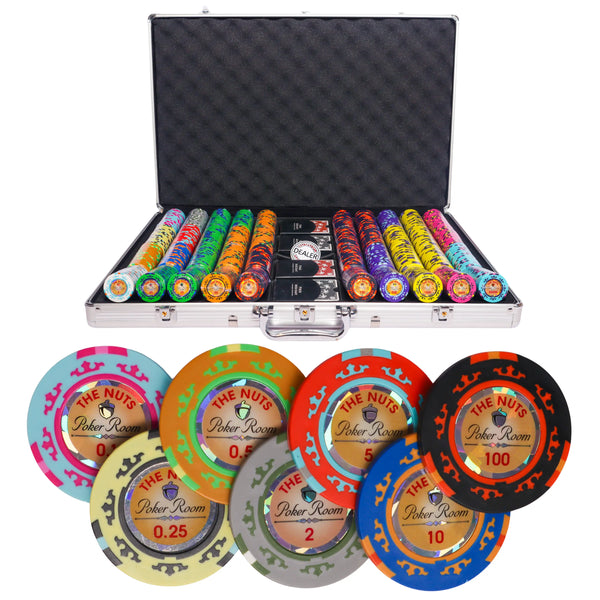
Bilder från netent casino spelbibliotek
Vanliga frågor om netent casino rtp
Vilka spelutvecklare och programvaruleverantörer finns tillgängliga på netent casino?
netent casino samarbetar med ett brett urval av ledande spelutvecklare, inklusive slotstudior, live casino-leverantörer och plattformsleverantörer, för att erbjuda ett varierat spelutbud.
Kan jag prova spel i demoversion innan jag spelar med riktiga pengar hos netent casino?
Ja, många av spelen på netent casino finns i demoversion, så att du kan testa dem gratis innan du satsar riktiga pengar.
Vilka är de mest populära spelen från de olika leverantörerna på netent casino?
Populära titlar inkluderar slots med hög volatilitet, progressiva jackpottspel och live casino-bord med professionella dealers, beroende på vilken leverantör du föredrar.
Hur vet jag att spelen på netent casino är rättvisa och pålitliga?
Alla spel från leverantörerna på netent casino är testade och certifierade av oberoende organ, och netent casino är licensierat av Spelinspektionen för att säkerställa rättvisa och säkerhet.
Erbjuder netent casino exklusiva spel eller specialerbjudanden från specifika leverantörer?
Ja, netent casino har ibland exklusiva speltitlar och kampanjer som är knutna till specifika leverantörer, vilket ger dig unika spelupplevelser.
Att hitta rätt netent casino kan ta tid, men det är värt det.
netent casino tips för ansvarsfullt spelande
Spela ansvarsfullt. netent casino vill påminna om att spel endast är tillåtet för personer över 18 år. Spel ska ses som underhållning, inte som ett sätt att tjäna pengar eller lösa ekonomiska problem. Vi uppmuntrar dig att sätta upp tids- och insättningsgränser för ditt spelande och att aldrig jaga förluster. Om du känner att spelandet börjar bli ett problem, finns hjälp att få. Spelinspektionen är den svenska tillsynsmyndigheten, och via Spelpaus.se kan du spärra dig från allt licensierat spel i Sverige. För stöd och rådgivning, kontakta Stödlinjen på 020-81 91 00.
casino mines — topputrustning | casino mines